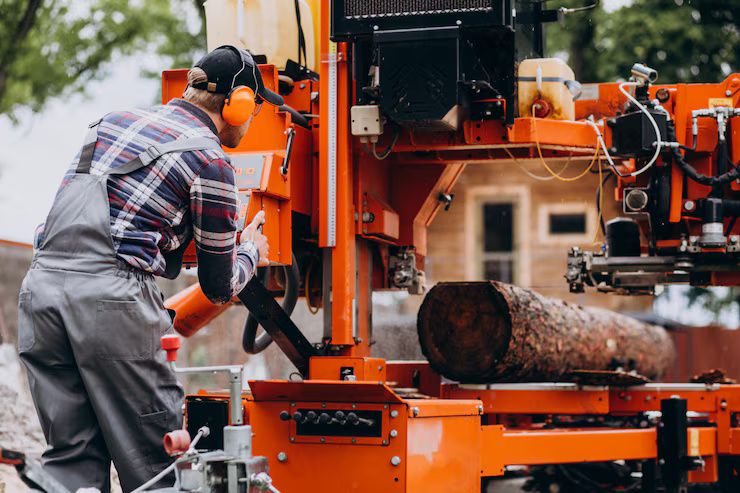
Woodworking machinery plays an important role in modern wood processing by helping transform raw timber, boards, and engineered wood into accurately shaped components. These machines use cutting, drilling, sanding, routing, pressing, and finishing processes to improve consistency and support different manufacturing requirements.
Understanding woodworking machinery can help students, manufacturers, designers, and general readers learn how modern machines process wood materials. The field includes traditional equipment as well as computer-controlled systems that use sensors, software, and automated movements.
Context
Woodworking machinery refers to mechanical or computer-controlled equipment used to process wood and wood-based materials. Depending on the machine, the material may be cut, shaped, drilled, sanded, joined, pressed, or finished.
Woodworking equipment has developed from manually operated tools into sophisticated systems with programmable controls. Computer numerical control (CNC) technology allows machines to follow digital instructions and perform repeated movements with precise positioning.
Common woodworking machinery includes:
- Table saws for straight cutting
- Band saws for curved or irregular cuts
- Planers for producing consistent thickness
- Jointers for preparing flat edges and faces
- Routers for creating grooves, profiles, and recesses
- CNC routers for computer-controlled cutting and shaping
- Sanding machines for surface preparation
- Drilling machines for creating holes
- Edge-banding machines for applying edge materials
- Woodworking presses for joining or laminating components
The basic workflow generally begins with material preparation. Wood is inspected, measured, and positioned before machining. The selected equipment then removes material or changes its shape according to the required dimensions.
| Machine type | Main process | Typical application |
|---|---|---|
| Table saw | Straight cutting | Panels and boards |
| Planer | Thickness reduction | Timber preparation |
| Jointer | Surface and edge flattening | Edge preparation |
| CNC router | Programmed cutting and shaping | Components and patterns |
| Sanding machine | Surface abrasion | Surface preparation |
| Drill press | Hole drilling | Joinery and assembly |
| Edge bander | Edge application | Panel processing |
Modern woodworking machinery can process solid wood, plywood, medium-density fiberboard (MDF), particleboard, and other engineered wood products. The appropriate machine depends on material characteristics, dimensions, production requirements, and the desired result.
Importance
Woodworking machinery matters because controlled mechanical processes can improve dimensional consistency and repeatability. This is particularly relevant when multiple components need to follow the same specifications.
Machinery also affects workplace organization and production planning. Operators need to understand machine capabilities, material behavior, cutting parameters, maintenance requirements, and safety procedures.
Different groups interact with woodworking machinery in different ways. Woodworkers may focus on machine operation, while designers consider how digital drawings translate into physical components. Engineers may study machine configuration and automation, and safety professionals examine hazards associated with moving parts, cutting tools, dust, and noise.
Computer-controlled woodworking equipment can connect digital design information with physical manufacturing. A digital model can be converted into machine instructions, allowing programmed cutting paths to guide the equipment.
However, automation does not remove the need for human oversight. Operators generally remain responsible for checking material placement, tooling, machine settings, workpiece condition, and the finished result.
Recent Updates
Recent developments in woodworking machinery have increasingly focused on automation, digital controls, connectivity, and resource efficiency. CNC systems have become an important part of modern wood processing because they can execute programmed cutting and shaping operations.
Sensors and computerized controls can help monitor machine conditions and process parameters. Some systems can record operating information that can later be used for maintenance planning or process analysis.
Another development is greater integration between design software and manufacturing equipment. Computer-aided design (CAD) and computer-aided manufacturing (CAM) systems can help convert digital drawings into machine-readable instructions.
Important technology trends include:
- CNC-controlled cutting and routing
- Automated material handling
- Digital machine controls
- Sensor-based monitoring
- Dust collection integration
- Automated tool management
- Software-based production planning
- Improved energy management
Dust extraction is also an important part of modern woodworking environments. Cutting and sanding operations can produce airborne wood dust, so machinery layouts often incorporate extraction systems designed to capture particles at or near the point of generation.
Engineered wood products have also influenced machinery requirements. Materials such as MDF and particleboard can have different machining characteristics from solid timber, requiring appropriate tooling and operating parameters.
Laws or Policies
Woodworking machinery is subject to workplace safety requirements that vary by country and jurisdiction. These rules commonly address machine guarding, electrical safety, hazardous dust, noise, personal protective equipment, operator training, and workplace conditions.
In the United States, the Occupational Safety and Health Administration (OSHA) has requirements covering machinery and woodworking-related hazards. OSHA standards address areas such as machine guarding and occupational exposure to wood dust.
In the European Union, machinery placed on the market has historically been governed by the Machinery Directive, with the Machinery Regulation establishing a newer framework and applying from 2027. Requirements include safety and conformity considerations for applicable machinery.
In India, workplace safety requirements can depend on the type of establishment and applicable central or state legislation. The Occupational Safety, Health and Working Conditions Code, 2020 provides a broader framework for occupational safety and working conditions, subject to its implementation and applicable rules.
Businesses and operators should consult the current requirements of the relevant authority rather than relying on general summaries. Important areas to review include:
- Machine guarding
- Emergency stopping arrangements
- Electrical protection
- Wood-dust control
- Noise exposure
- Personal protective equipment
- Operator training
- Inspection and maintenance procedures
Safety requirements can differ according to machine type, workplace environment, material, and jurisdiction.
Tools and Resources
Several technical resources can help people understand woodworking machinery and wood-processing practices.
Manufacturer manuals and technical documentation can explain machine specifications, operating procedures, tooling requirements, maintenance intervals, and safety precautions. These documents should be treated as machine-specific references.
Government workplace-safety websites are useful for understanding regulatory requirements. In the United States, OSHA provides educational material relating to woodworking hazards and machine safety. European users can consult European Commission resources concerning machinery legislation and conformity requirements.
Useful categories of resources include:
- Machine operating manuals
- CAD and CAM software documentation
- Woodworking safety guidance
- Dust-control guidance
- Material specification sheets
- Measurement and conversion calculators
- Maintenance checklists
- Machine setup templates
When selecting technical information, readers should check the publication date and jurisdiction. Machine specifications and regulations can change, so current documentation is preferable for operational decisions.
FAQs
What is woodworking machinery?
Woodworking machinery is equipment designed to cut, shape, drill, sand, join, press, or otherwise process wood and engineered wood materials.
How does CNC woodworking machinery work?
CNC woodworking machines receive programmed digital instructions and use controlled movements to guide cutting, routing, drilling, or shaping operations.
Which materials can woodworking machines process?
Many machines can process solid timber, plywood, MDF, particleboard, and other wood-based panels. The suitable material depends on the machine and tooling.
Why is dust extraction important?
Cutting and sanding can generate wood dust. Appropriate extraction can help control airborne dust and support a safer working environment when designed and maintained correctly.
Does automated woodworking machinery eliminate manual work?
No. Automated systems can reduce or simplify certain operations, but people are still needed for programming, setup, inspection, maintenance, safety checks, and process supervision.
Conclusion
Woodworking machinery combines mechanical processes, cutting tools, digital controls, and material-handling systems to process wood with repeatable results. Modern equipment ranges from conventional saws and planers to CNC routers and automated production systems.
Understanding how each machine interacts with wood materials helps users select appropriate processes and recognize relevant safety considerations. Digital manufacturing, automation, sensors, and improved dust management continue to influence the development of woodworking equipment.
For anyone learning about woodworking machinery, machine manuals, government safety guidance, technical specifications, and CAD/CAM documentation provide useful starting points. Safe operation should always follow applicable regulations and the instructions provided for the specific equipment.