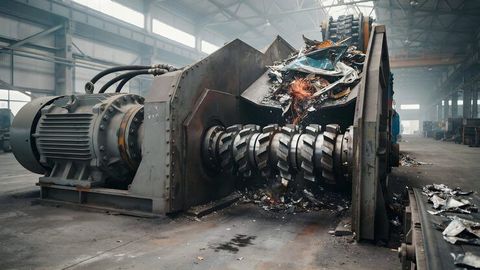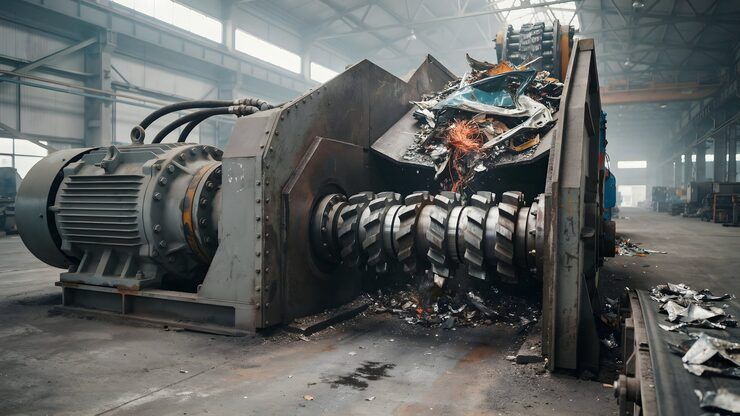
Industrial shredder machines are mechanical systems designed to reduce large or difficult materials into smaller pieces. They are used across recycling, manufacturing, waste processing, packaging, agriculture, and several industrial operations.
An industrial shredder machine can handle materials such as plastics, rubber, wood, paper, textiles, and selected forms of industrial waste, depending on its design.
Understanding industrial shredder machine types, working methods, components, and operating considerations can help readers understand how these machines fit into modern material-processing systems. Different machines use different cutting mechanisms, speeds, torque levels, and configurations according to the material being processed.
Context
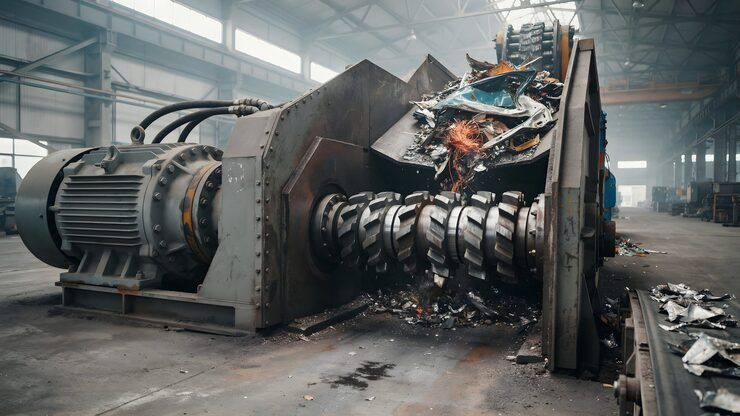
An industrial shredder machine is equipment that mechanically reduces the size of materials through cutting, tearing, shearing, or crushing actions. Unlike small shredders intended for office or household use, industrial models are generally designed for continuous or heavy-duty processing and can accommodate larger material volumes.
The basic purpose is to transform bulky material into smaller and more manageable pieces. Size reduction can make subsequent processing steps easier, including sorting, screening, conveying, recycling, compaction, or further material treatment.
Industrial shredders have developed alongside modern manufacturing and recycling systems. Earlier mechanical designs were relatively simple, while newer systems may incorporate automated controls, variable-speed drives, sensors, monitoring systems, and programmable operating sequences.
Common materials processed by industrial shredders include:
- Plastic containers and production scrap
- Wood and plant-based materials
- Paper and cardboard
- Rubber and selected textile materials
- Packaging residues
- Certain industrial and municipal waste streams
The correct machine configuration depends heavily on the material characteristics. Factors such as hardness, moisture, density, dimensions, contamination, and desired output size influence the appropriate shredding method.
Importance
Industrial shredding plays an important role in material preparation and waste reduction. Large objects can be difficult to transport, sort, screen, or process in their original form. Reducing their physical size can make downstream handling more practical.
Manufacturing facilities may use shredders for production residues and rejected materials. Recycling operations can use them as an initial size-reduction stage before additional separation or processing. Waste-processing facilities may also integrate shredders into larger material-handling systems.
The main areas affected include:
- Manufacturing and production facilities
- Recycling and resource-recovery operations
- Packaging and material-processing industries
- Waste-management facilities
- Agricultural and biomass operations
- Construction and demolition processing
Another important factor is material consistency. A controlled output size can support later processing stages, although the actual particle size depends on the machine configuration, cutting system, screen arrangement, and material characteristics.
Industrial shredder machines can also be integrated with conveyors, magnetic separators, screens, dust-control equipment, and other processing equipment. In an automated facility, sensors and control systems can coordinate these stages and monitor operating conditions.
Recent Updates
Recent developments in industrial shredder technology have focused on automation, energy management, monitoring, safety, and greater process control. Modern equipment may use variable-frequency drives or other electronic control systems to adjust motor operation according to processing requirements.
Digital monitoring is another important development. Sensors can track variables such as motor load, temperature, vibration, operating time, and other machine conditions. Data from these systems can help operators identify unusual operating patterns and plan maintenance activities.
Artificial intelligence and data analytics are also being explored in industrial material processing. These technologies can support predictive maintenance by identifying patterns associated with component wear or abnormal machine behavior. Their usefulness depends on sensor quality, system integration, and the quality of historical operating data.
Several technical trends are particularly relevant:
- Automated feed control
- Variable-speed motor systems
- Improved cutting-rotor designs
- Electronic overload protection
- Condition monitoring
- Remote equipment diagnostics
- Improved dust and noise management
- Integration with automated sorting systems
Energy efficiency has also become an important consideration. A machine that operates at an appropriate speed and load can reduce unnecessary energy consumption. However, actual energy use varies significantly according to motor capacity, material characteristics, throughput, operating conditions, and machine configuration.
Laws or Policies
Industrial shredder operations can be subject to different environmental, workplace-safety, waste-management, noise, emissions, and electrical regulations. The exact requirements depend on the country, state, material being processed, and facility type.
In the United States, organizations such as the Occupational Safety and Health Administration provide workplace-safety requirements relevant to machinery, guarding, lockout/tagout, and hazardous energy control. Environmental requirements may also apply when shredding regulated waste or materials that can generate dust, emissions, or other environmental concerns.
In the European Union, machinery and workplace requirements can involve CE-related conformity processes, machinery legislation, occupational safety requirements, and environmental regulations. Requirements vary according to the equipment and its intended application.
In India, industrial facilities may need to consider applicable requirements from the Ministry of Environment, Forest and Climate Change, Central Pollution Control Board, State Pollution Control Boards, and workplace-safety authorities. Waste categories can have their own regulatory frameworks, particularly for plastic, electronic, hazardous, biomedical, or other regulated materials.
Before operating an industrial shredder machine, facilities should identify the rules applicable to:
- Machine guarding and worker protection
- Electrical installations
- Lockout and isolation procedures
- Noise and dust control
- Waste classification and handling
- Fire prevention
- Environmental emissions
- Record keeping and facility permissions
Regulations can change over time, so organizations should consult the relevant government authority or current regulatory publication for their jurisdiction.
Tools and Resources
Several types of resources can help operators, engineers, students, and facility managers understand industrial shredding systems.
Manufacturer technical manuals can provide information about machine components, operating limits, maintenance intervals, electrical requirements, and approved material ranges. These documents should be used together with applicable workplace and environmental requirements.
Engineering references can help explain concepts such as torque, rotational speed, motor power, cutting forces, particle size, throughput, and material properties.
Useful resource categories include:
- Government environmental agencies
- Workplace-safety authorities
- Industrial machinery standards organizations
- Recycling and waste-management publications
- Engineering handbooks
- Equipment operating manuals
- Material-safety documentation
- Maintenance checklists
- Energy-monitoring tools
A basic process assessment can also compare input material characteristics with the desired output. Important factors include material density, moisture, dimensions, feed rate, expected output size, and contamination levels.
| Factor | Why It Matters |
|---|---|
| Material type | Determines suitable cutting approach |
| Material hardness | Influences cutting and wear requirements |
| Feed dimensions | Affects feeding and machine capacity |
| Desired output size | Helps determine rotor and screen configuration |
| Moisture content | Can influence feeding and processing behavior |
| Operating speed | Affects processing characteristics and energy use |
| Safety requirements | Helps establish guarding and operating procedures |
FAQs
What is an industrial shredder machine?
An industrial shredder machine is mechanical processing equipment used to reduce large or bulky materials into smaller pieces. Its design depends on the material and required output.
What are the main types of industrial shredders?
Common types include single-shaft, double-shaft, four-shaft, and specialized granulating or crushing systems. Each design uses different cutting arrangements and operating characteristics.
How does an industrial shredder machine work?
Material enters a feeding area and moves toward rotating cutting components. Depending on the design, cutters shear, tear, or fracture the material until the desired size or processing condition is reached.
What materials can industrial shredders process?
Depending on the machine configuration, industrial shredders may process plastics, wood, paper, rubber, textiles, packaging materials, and selected waste streams. Not every machine is suitable for every material.
What safety measures are important?
Important measures include appropriate machine guarding, emergency controls, isolation procedures, operator training, routine inspection, and compliance with applicable workplace regulations. Materials with unusual hazards require additional controls.
Conclusion
Industrial shredder machines are important size-reduction systems used across manufacturing, recycling, waste processing, and other industrial applications. Their performance depends on machine design, material characteristics, operating conditions, maintenance, and the required output.
Recent developments increasingly emphasize automation, condition monitoring, energy management, and improved process control. Understanding the different industrial shredder machine types and working methods provides a useful foundation for evaluating how shredding fits into a broader material-processing operation.
For safe and effective operation, facilities should follow the machine manufacturer's technical documentation and applicable regulations. Proper assessment of materials, operating conditions, safety controls, and downstream processing requirements is essential when designing or managing a shredding process.