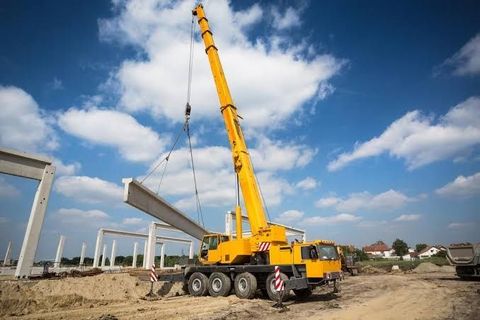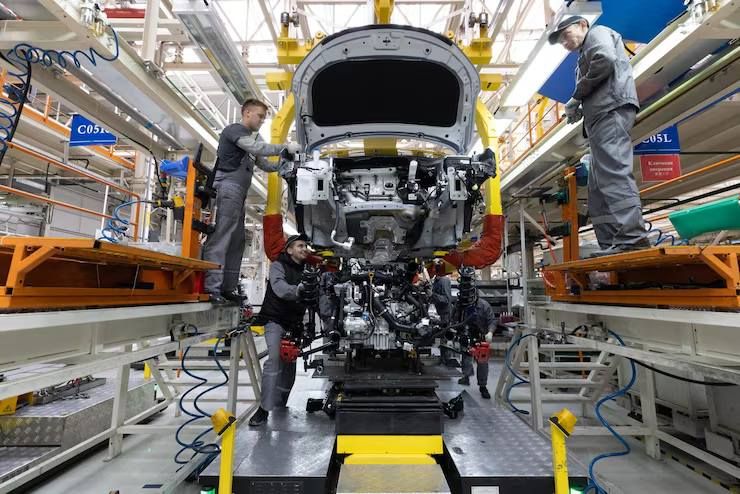
Automotive machinery includes the equipment, automated systems, production lines, and supporting technologies used to manufacture vehicles and their components. These systems can cover metal forming, machining, welding, painting, assembly, inspection, material handling, and increasingly battery and electric-drive production.
Modern automotive manufacturing combines mechanical equipment with robotics, sensors, software, data systems, and quality-control technologies. Understanding how these machines work helps manufacturers, engineers, students, and researchers understand the wider automotive production process and its changing requirements.
Context
Automotive machinery is designed to perform specific manufacturing tasks with repeatable accuracy. A typical vehicle production environment may contain several connected stages, from processing raw materials to final inspection.
Common categories include:
| Machinery category | Typical application |
|---|---|
| CNC machines | Precision machining of components |
| Press machines | Forming sheet metal and structural parts |
| Welding systems | Joining body and structural components |
| Robotic systems | Welding, handling, painting, and assembly |
| Conveyors | Moving parts between production stages |
| Paint systems | Surface preparation and coating |
| Inspection equipment | Dimensional and quality verification |
| Battery equipment | Cell, module, and pack production |
| Assembly systems | Installing mechanical and electrical components |
The purpose of integrating these systems is to create a controlled production flow. Automation can coordinate machines, materials, measurements, and production data while reducing repetitive manual operations.
Automotive machinery also differs according to the vehicle type. Internal-combustion vehicles, hybrids, battery-electric vehicles, and commercial vehicles can require different manufacturing equipment.
Importance
Automotive machinery affects manufacturers, engineers, machine operators, maintenance teams, component producers, regulators, and consumers indirectly through the vehicles produced.
Precision is particularly important because automotive components often have defined dimensional and performance requirements. A small variation in a machined component, weld, fastening operation, or assembly position can affect later production stages.
Important areas include:
- Production accuracy and repeatability
- Workplace safety
- Material utilization
- Energy consumption
- Production traceability
- Quality inspection
- Equipment reliability
- Process automation
The shift toward electric vehicles is also changing factory equipment. Battery-electric vehicles generally have simpler mechanical drivetrains than conventional vehicles, while requiring greater emphasis on batteries, power electronics, software, sensors, and electrical systems. The International Energy Agency reported that nearly 22 million electric cars were produced globally in 2025, more than 25% above the previous year.
Recent Updates
Automation and digitalization are major developments in automotive manufacturing. Modern factories increasingly connect production machines with sensors, industrial networks, data platforms, and automated inspection systems.
Artificial intelligence is also being explored for areas such as visual inspection, predictive analysis, process monitoring, and production planning. The International Energy Agency's 2026 Global EV Outlook notes that artificial intelligence, semiconductor technology, centralized vehicle software, and advanced computing are becoming increasingly important across the automotive sector.
Another development is the expansion of equipment associated with electric-vehicle manufacturing. Battery production requires specialized processes for electrode production, cell assembly, formation, module construction, and pack integration.
Robotics are also becoming more closely integrated with machine vision and automated control. These combinations can allow production systems to detect variations and adjust processes according to defined parameters.
The following trends are particularly relevant:
- Greater use of robotics and machine vision
- Digital monitoring of production equipment
- Increased battery manufacturing capacity
- AI-assisted inspection and process analysis
- More connected production systems
- Greater attention to energy and material efficiency
The IEA also reports that electric vehicles are increasingly connected with software-defined architectures, while AI and computing advances are influencing vehicle control and automated driving technologies.
Laws or Policies
Automotive machinery must comply with the laws and technical requirements applicable to the country where equipment is designed, installed, or operated. Requirements can cover machine safety, electrical systems, workplace protection, emissions, environmental management, and documentation.
In the European Union, Regulation (EU) 2023/1230 establishes a new machinery framework. Its general application date is 20 January 2027, with some provisions applying earlier. The regulation includes categories such as vehicle servicing lifts and certain safety components using machine-learning approaches.
For machinery safety principles, ISO 12100:2010 provides terminology and a methodology for identifying hazards, assessing risks, and reducing risks during machinery design. ISO states that the standard was reviewed and confirmed in 2022 and remains current while a revised edition is being developed.
In the United States, workplace machinery requirements include OSHA rules covering machine guarding and hazardous energy. OSHA's lockout/tagout standard, 29 CFR 1910.147, addresses unexpected machine startup or release of stored energy during maintenance activities.
Vehicle environmental regulations can also affect manufacturing decisions. U.S. federal vehicle-emissions rules have undergone significant changes in 2026, including EPA's February 2026 action concerning federal greenhouse-gas standards for motor vehicles. Because regulatory frameworks can change, manufacturers should consult current government publications for the applicable jurisdiction.
Tools and Resources
Several authoritative resources can help readers understand automotive machinery, manufacturing processes, and regulatory requirements.
Useful resources include:
- International Energy Agency — Global EV Outlook and EV data resources
- ISO — Machinery safety standards and technical information
- OSHA — Workplace machinery and hazardous-energy requirements
- U.S. EPA — Vehicle emissions regulations and regulatory updates
- EUR-Lex — European Union legislation and machinery regulations
- Manufacturer documentation — Equipment specifications, operating procedures, and technical manuals
The IEA's 2026 Global EV Outlook includes a Global EV Data Explorer and Global EV Policy Explorer for examining electric-vehicle statistics and policy measures across markets.
For practical research, readers can compare machinery by production stage, automation level, material type, accuracy requirements, energy use, safety features, and integration with factory-control systems.
FAQs
What is automotive machinery?
Automotive machinery refers to equipment and automated systems used to manufacture, process, inspect, move, and assemble vehicle components and complete vehicles.
What machines are commonly used in automotive manufacturing?
Common equipment includes CNC machines, presses, robotic welding systems, conveyors, painting systems, assembly equipment, inspection machines, and specialized battery-production equipment.
How is automation changing automotive manufacturing?
Automation connects robotics, sensors, machine vision, software, and production equipment. It can improve process repeatability, monitoring, inspection, and material movement.
Why is electric-vehicle manufacturing changing factory equipment?
Electric vehicles require different production processes for batteries, electric motors, power electronics, and high-voltage systems. This creates demand for specialized production and inspection equipment.
What standards are relevant to machinery safety?
ISO 12100 provides general principles for machinery risk assessment and risk reduction. National and regional workplace regulations can add further requirements depending on where equipment is used.
Conclusion
Automotive machinery forms the physical and digital foundation of modern vehicle manufacturing. CNC equipment, robotics, presses, inspection systems, conveyors, assembly technologies, and battery-production equipment work together to support increasingly complex production processes.
The industry is moving toward greater automation, connected equipment, AI-assisted analysis, and specialized electric-vehicle manufacturing. At the same time, machinery safety, workplace rules, environmental requirements, and regional regulations remain important considerations.
Understanding automotive machinery therefore requires more than studying individual machines. It also involves examining how equipment, people, software, materials, safety systems, and production processes interact within the wider manufacturing environment.