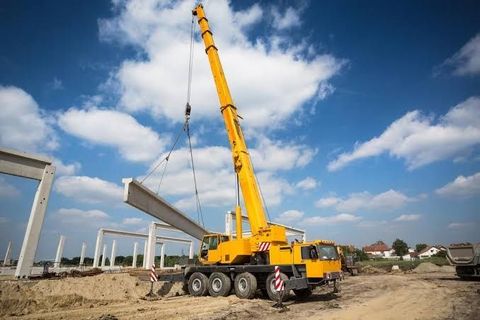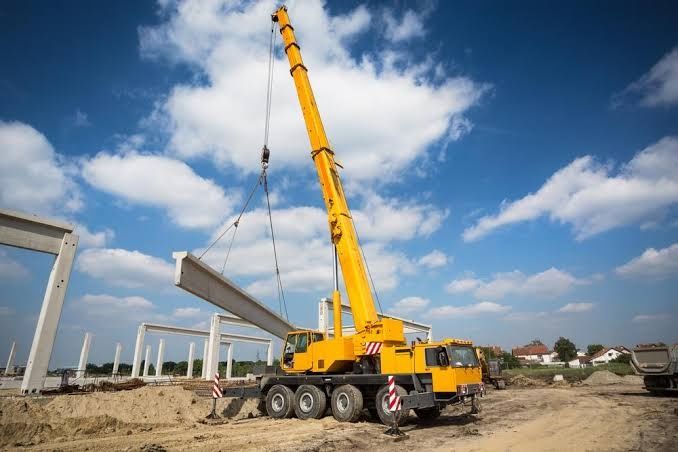
Mobile cranes are lifting machines designed to move suspended loads while operating from a mobile platform.
They are widely used in construction, infrastructure, manufacturing, logistics, maintenance, and other industrial activities where materials need to be positioned at different locations.
This mobile crane guide explains the main types, common uses, important features, operating considerations, and safety basics. Understanding these areas can help operators, site managers, engineers, workers, and students develop a clearer knowledge of mobile crane operations.
Context – Mobile Crane Guide and Basic Overview
A mobile crane combines a crane structure with a mobile carrier, allowing the equipment to travel between working locations. Depending on the design, the carrier may use wheels, tracks, or a truck-mounted platform. The crane normally includes a boom, hoist mechanism, wire rope, hook, counterweight, operator controls, and supporting systems.
Mobile cranes are designed for different working environments. Common types include truck-mounted cranes, rough-terrain cranes, all-terrain cranes, crawler cranes, and pick-and-carry cranes. Their selection depends on factors such as load characteristics, ground conditions, lifting height, working radius, mobility requirements, and site restrictions.
| Mobile crane type | General characteristic | Common application |
|---|---|---|
| Truck-mounted crane | Mounted on a road-going carrier | Construction and infrastructure |
| Rough-terrain crane | Designed for uneven work areas | Construction sites |
| All-terrain crane | Combines road and off-road mobility | Large infrastructure projects |
| Crawler crane | Uses tracked undercarriage | Heavy lifting and long-duration projects |
| Pick-and-carry crane | Designed to move with suspended loads within defined limits | Industrial and construction work |
A crane's rated capacity is not a single value that applies in every situation. Capacity can change according to boom length, working radius, configuration, counterweight arrangement, ground conditions, and other factors.
Importance – Why Mobile Cranes Matter
Mobile cranes can reduce the need for manual handling when heavy or bulky materials must be positioned at height or across a work area. They can also provide flexibility when lifting locations change during a project.
Their operation affects more than the crane operator. Rigging personnel, signal persons, site supervisors, maintenance personnel, nearby workers, pedestrians, and other contractors may all be exposed to crane-related hazards.
Important considerations include:
- Load weight and dimensions
- Lifting radius and height
- Ground bearing capacity
- Weather and wind conditions
- Nearby structures and obstacles
- Electrical power lines
- Rigging configuration
- Crane configuration and rated capacity
Safe planning is particularly important because an incorrect load calculation, unsuitable ground condition, poor communication, or unexpected movement can create serious hazards.
Recent Updates – Trends and Developments
Modern mobile cranes increasingly incorporate electronic monitoring and operator-assistance technologies. Load moment indicators, safe-load indicators, boom angle monitoring, cameras, alarms, and digital diagnostic systems can provide additional information during crane operation.
Another development is greater use of telematics and digital fleet monitoring. These systems can record equipment information, operating conditions, inspection data, and maintenance-related information. Their availability varies by crane model and manufacturer.
Automation and electronic controls are also developing. Some newer crane systems can provide enhanced control functions, configuration monitoring, and alerts when operating conditions approach defined limits.
Safety standards continue to evolve as well. ASME currently lists B30.5-2025 for Mobile and Locomotive Cranes, covering areas including construction, inspection, testing, maintenance, and operation.
ISO 4305:2014 remains a current international standard for determining mobile-crane stability. ISO states that the standard was reviewed and confirmed in 2024.
These developments do not replace proper planning, competent personnel, manufacturer instructions, inspections, or applicable regulations.
Laws or Policies – Crane Safety Requirements
Mobile crane regulations depend on the country, industry, location, and type of work. Operators should always identify the rules applicable to the specific worksite rather than relying on a general international guideline.
In the United States, OSHA 29 CFR 1926 Subpart CC establishes requirements for cranes and derricks used in construction. Its scope includes several mobile crane categories, including wheel-mounted, rough-terrain, all-terrain, commercial truck-mounted, and boom truck cranes.
OSHA's requirements address subjects such as:
- Ground conditions
- Assembly and disassembly
- Power-line safety
- Equipment inspections
- Wire-rope inspection
- Operational aids
- Operator qualification
- Signal-person qualification
- Maintenance and repair activities
OSHA also specifically addresses ground conditions and power-line hazards within Subpart CC.
In India, requirements can depend on the workplace and industry. The Factories Act framework includes provisions concerning lifting machines, chains, ropes, and lifting tackles, including examination and safety requirements.
For mining activities, India's Directorate General of Mines Safety has published crane-related safety requirements and guidance. A 2025 DGMS circular discusses equipment such as automatic safe-load indicators, load-radius indicators, motion-limit devices, and reversing alarms.
For any project, the applicable national legislation, local requirements, manufacturer instructions, and recognized technical standards should be reviewed together.
Tools and Resources – Useful Crane Information
Several resources can help users understand mobile crane safety and operating requirements.
The OSHA regulations database provides access to U.S. construction requirements, including Subpart CC.
ASME B30.5 provides a recognized technical reference covering mobile and locomotive cranes. Its scope includes construction, inspection, testing, maintenance, and operation.
ISO 4305 provides information about stability determination for mobile cranes and applies to cranes mounted on wheels or crawlers, subject to its stated scope.
Useful practical resources can also include:
- Manufacturer load charts
- Operator manuals
- Inspection checklists
- Lift-planning worksheets
- Rigging reference tables
- Ground-condition assessments
- Weather and wind monitoring tools
- Site-specific emergency procedures
A load chart should always be interpreted for the exact crane configuration being used. It should not be treated as a general capacity table for every operating condition.
FAQs – Mobile Crane Guide
What is a mobile crane?
A mobile crane is a crane mounted on a mobile carrier. It can travel between work locations and lift, lower, and position suspended loads within its specified operating limits.
What are the main types of mobile cranes?
Common types include truck-mounted, rough-terrain, all-terrain, crawler, and pick-and-carry cranes. Each type has different mobility, stability, terrain, and lifting characteristics.
What factors affect crane lifting capacity?
Capacity can depend on load weight, boom length, working radius, boom angle, counterweight configuration, ground conditions, and the crane's operating configuration.
What are important mobile crane safety basics?
Key practices include checking ground conditions, following the manufacturer's load chart, completing required inspections, maintaining communication with signal personnel, controlling access to hazardous areas, and observing electrical-line clearances where applicable.
Why are load charts important?
Load charts identify the crane's rated capacity for particular configurations and operating conditions. Using the correct chart helps determine whether a planned lift falls within the crane's specified limits.
Conclusion – Key Mobile Crane Insights
A mobile crane is a flexible lifting machine used across construction, infrastructure, industrial, and other applications. Understanding crane types, operating features, load charts, ground conditions, and safety requirements is essential for responsible planning and operation.
Technology is adding more monitoring and information systems to modern cranes, while technical standards and regulations continue to provide structured safety requirements. Users should always follow applicable laws, manufacturer instructions, site procedures, and relevant technical standards.
For anyone learning about mobile cranes, a useful starting point is to understand the relationship between rated capacity, working radius, boom configuration, stability, and ground conditions.
Regular inspection, competent operation, effective communication, and appropriate lift planning remain important parts of safe crane activity.